




Please tell us about your field of expertise.
My background is in water quality research, and I still study Lake Inawashiro in Fukushima. At Gtech, however, I focus mainly on greenhouse gases that come from farmland and soils, especially nitrous oxide (N₂O), which is a powerful greenhouse gas.
While N₂O emissions from fields using chemical fertilizers are relatively predictable, emissions from organic fertilizers are much more difficult to estimate. Organic fertilizers come in many different forms, such as livestock manure (such as cattle or poultry manure), plant residues, and crop straw. Each of these breaks down differently in the soil, and the timing of application can greatly influence when and how gases are released.
In my research, I look not only at greenhouse gas emissions but also at how nutrients move through soil and water, including possible effects on groundwater. I’m interested in finding better soil management practices that can reduce environmental impacts while supporting sustainable agriculture and healthy soils.
What inspired you to pursue this field?
I have been interested in river and lake pollution, as well as water purification, since high school. I once read a paper about the water quality of Lake Kasumigaura written by a professor at Ibaraki University, and it inspired me to apply there.
Ironically, by the time I enrolled, that professor had already retired. However, this led to new encounters, and I was fortunate and honored to become a student of one of his former students — effectively becoming his academic grandstudent. Through this connection, I joined the nitrogen research laboratory originally founded by that professor.
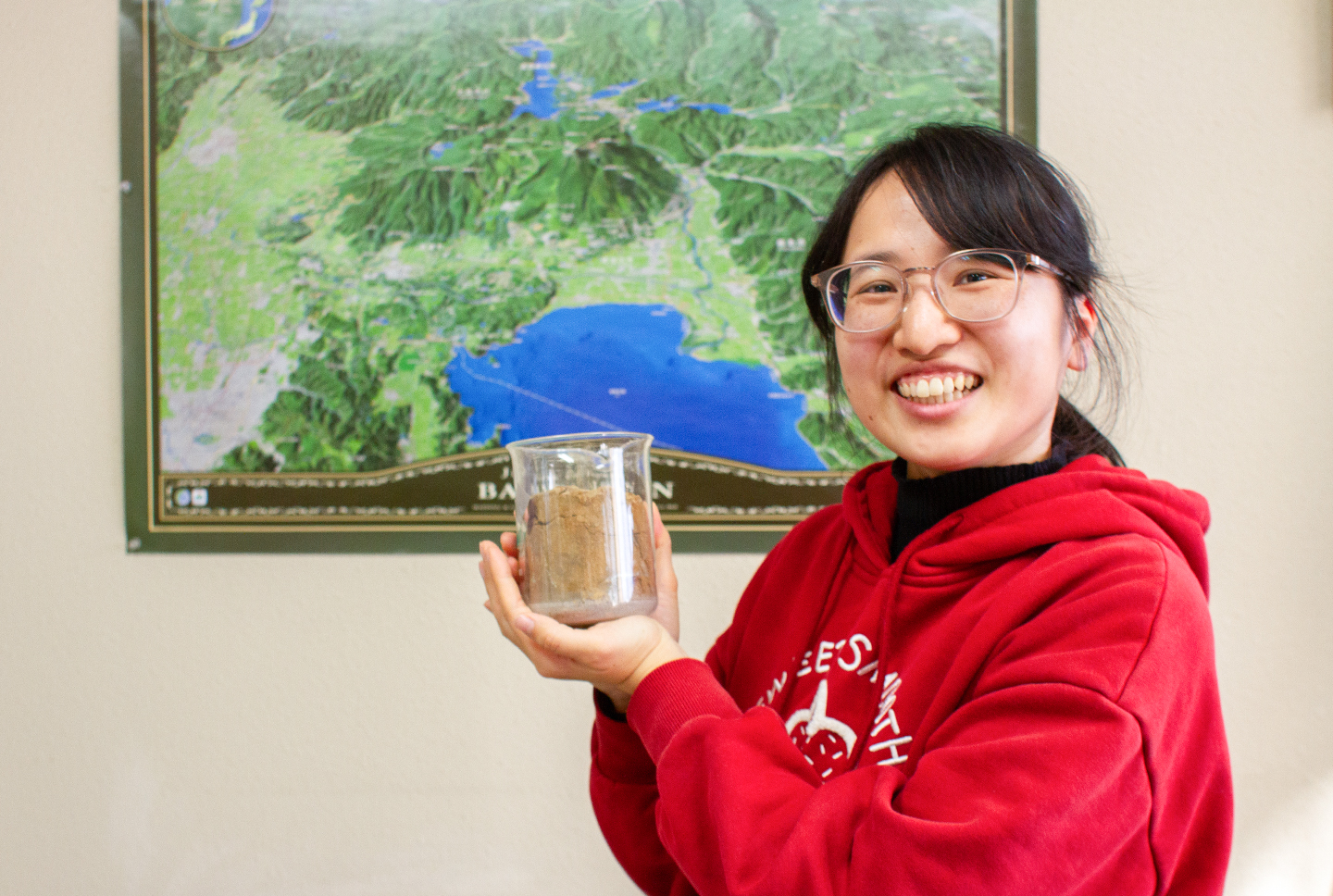
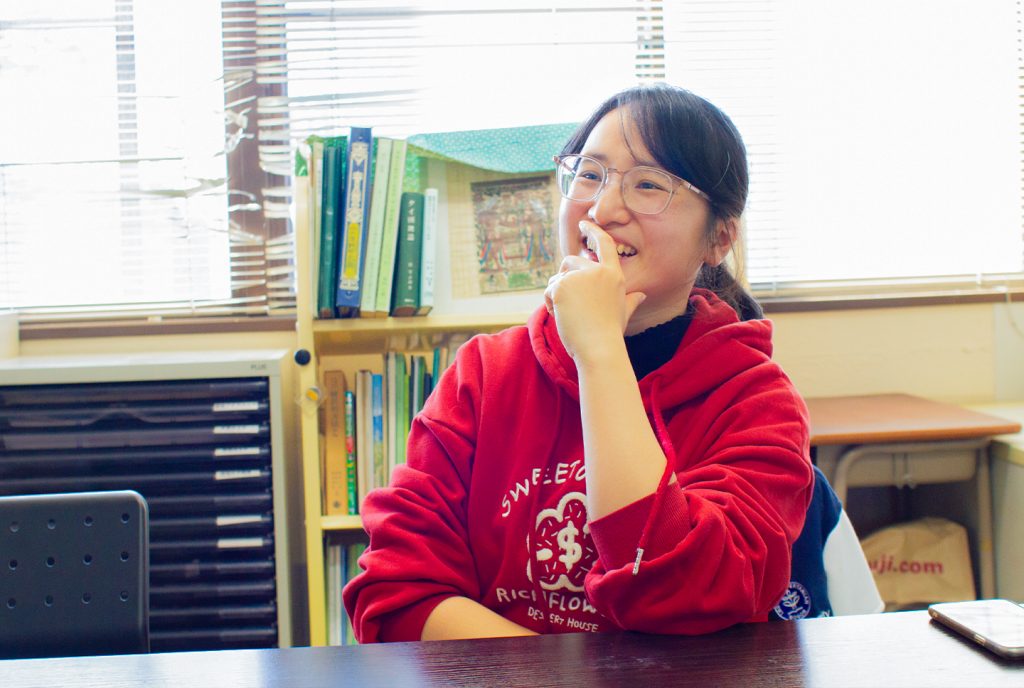
That lab placed a strong emphasis on fieldwork. We conducted soil and water surveys, and during drilling surveys to collect soil cores, I even tasted soil samples — though I wouldn’t recommend trying that yourself! Field investigations can be physically demanding, but working side by side with researchers from outside institutions made the experience increasingly exciting. That sense of discovery drew me deeper into this field.
What do you find rewarding about your work?
I consider myself very much a field-oriented researcher. I enjoy being outdoors, touching soil and water, far more than staying inside a laboratory.
When organic matter such as grasses breaks down in the soil, it produces a distinctive smell. Sometimes I even lie close to the ground, breathe in the scent of the soil, and find myself imagining, “Maybe gas is coming out right now!?” Moments like that — when I can directly sense changes happening in the field—are truly exciting.
People sometimes joke that I am a bit unusual (and maybe they’re right), but research is not only collecting data. Using all five senses to feel and understand soil conditions reminds me that seeing — and sensing — is believing. That, to me, is the real joy of research.
How does your work connect with other research at Gtech?
Nitrogen cycling in soil is extremely complex, so I work closely with researchers in crop science, horticulture, and microbial ecology.
One of the great things about Gtech is its open and collaborative atmosphere. When someone proposes a new idea, colleagues often respond, “That sounds interesting—let’s give it a try!” We support one another and combine our different areas of expertise.
We also collaborate closely with researchers at National Agriculture and Food Research Organization (NARO) and Japan International Research Center for Agricultural Sciences (JIRCAS) on large-scale field measurements of greenhouse gases and soil analyses. Being able to examine a single phenomenon from multiple perspectives as a team is one of our greatest strengths.
What goals or mission do you have in this research?
My goal is to establish a Japanese framework for soil health indicators.
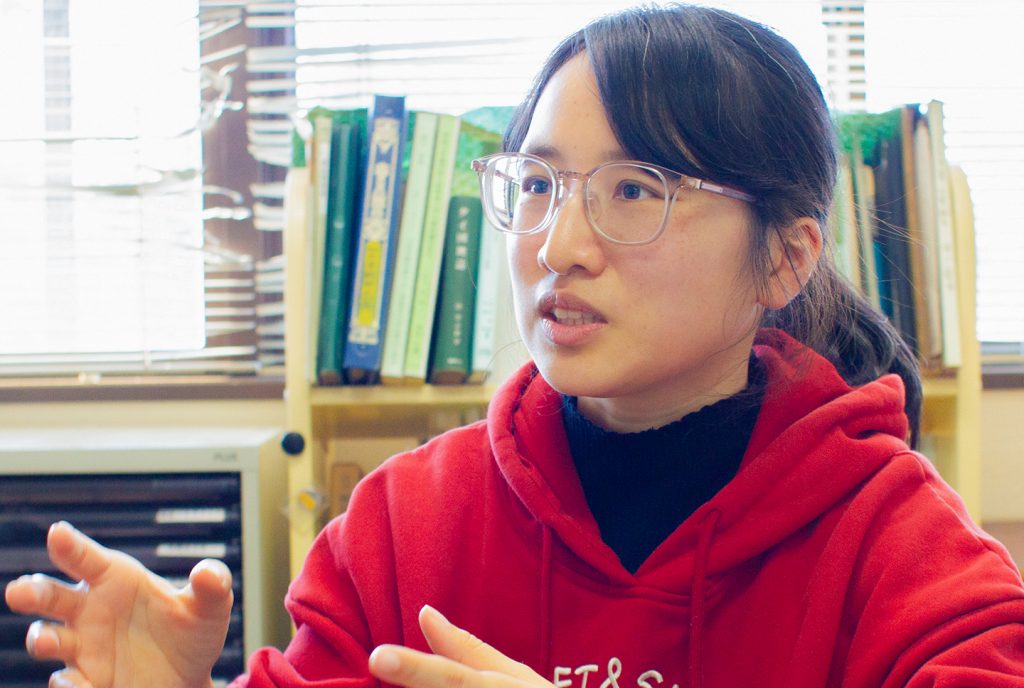
“Soil health” refers to the ability of soil to function as a living ecosystem that supports plants, animals, and humans. In Japan, however, we still lack a comprehensive system for evaluating soil health. Most assessments focus mainly on crop yield, but soil health should also consider environmental factors such as greenhouse gas emissions, protecting water quality, and preventing soil compaction.
By developing practical soil health indicators, we would be able to better understand which crops are best suited to a particular field and what types and amounts of inputs are needed to maintain ideal soil conditions. In other words, it would serve as a kind of health checkup for the soil.
What do you expect from Gtech in the future?
I hope to see our research findings put into practice more widely in society.
Using the data we generate, I would like to present farmers and policymakers with clear options: “Here are several possible management approaches—which direction would you like to take?”
Rather than simply saying, “This method is best,” or “You must reduce emissions,” I believe it is important to have open discussions about trade-offs. For example, one approach may reduce greenhouse gas emissions but could also have certain effects on groundwater. Providing transparent information that supports informed dialogue is essential.
Through Gtech’s collaborative teamwork, I hope we can help create “happy farming practices” that are both environmentally responsible and suited to real-world conditions.
A message for those interested in Gtech
I hope people can move beyond one-sided views such as “organic farming is always good” or “chemical fertilizers are bad.” Each approach has its advantages and disadvantages, and combining them thoughtfully can help create agriculture that is kind to both people and the environment.
This idea also applies to our daily lives. Rather than making assumptions or judging things from only one perspective, I believe it is important to recognize each other’s strengths and seek a balanced, “happy” solution.
Let’s think together about what truly benefits the future of our planet and agriculture. And yes—we should also work toward improving the food self-sufficiency!