






Please tell us about your field of expertise.
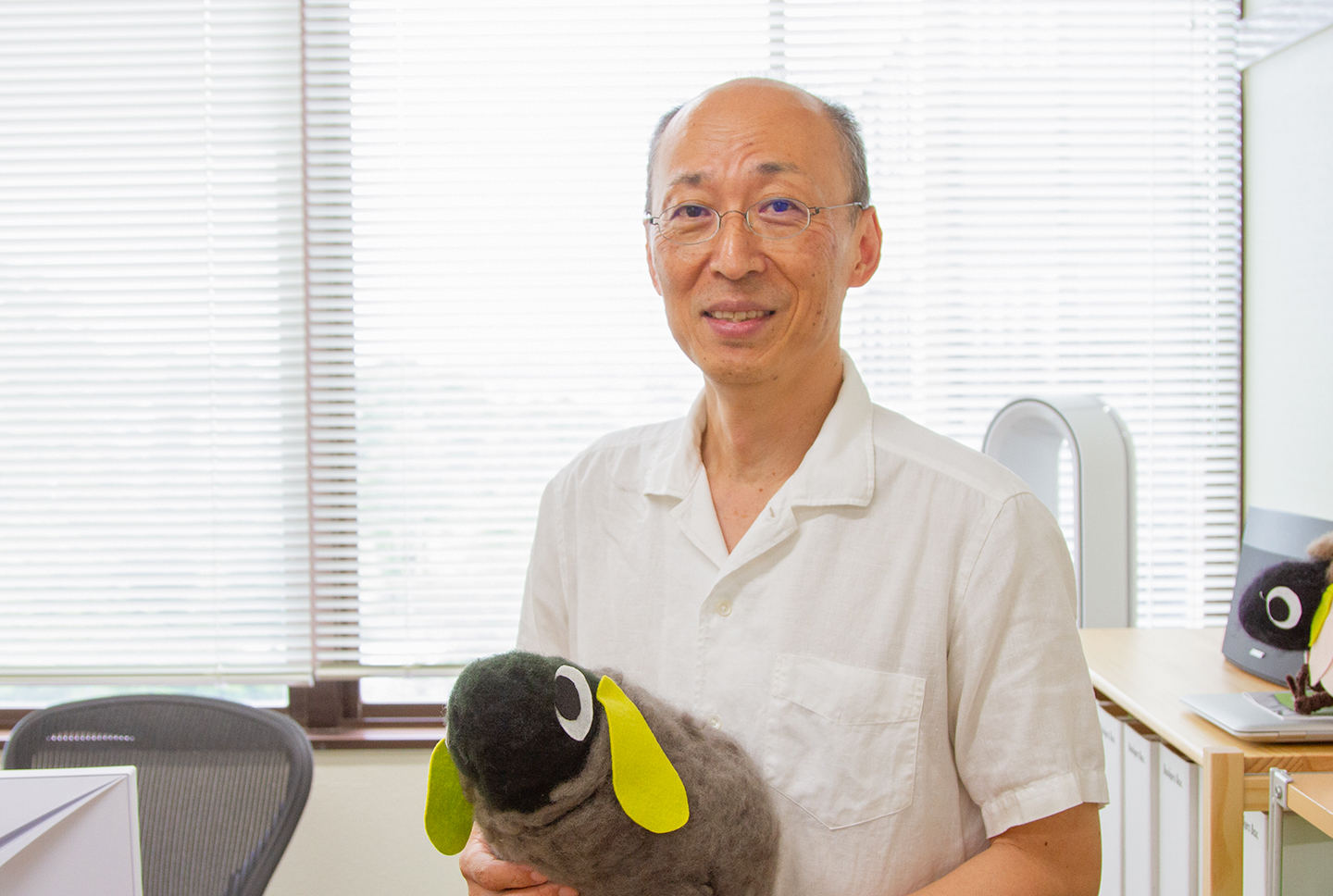
I conduct research in the Microbial Ecology Laboratory, where I study interactions between plants and microorganisms, particularly their symbiotic relationships.
In fact, nearly all plants in nature live in symbiosis with microorganisms. Just as humans have gut microbiota, plants harbor invisible fungi in their leaves, stems, and roots. These fungi vary in both species and function. My research focuses on endophytes—fungi that live symbiotically within plant roots.
Like the microorganisms in our gut, when these fungi colonize the inside of plant roots, they can dramatically change the plant itself. By forming a single symbiotic system with the plant, endophytes are able to absorb nutrients that roots alone cannot access and supply them to the host plant. They can also activate the plant’s own genes, making it more tolerant of environmental stresses such as heat, cold, and disease.
Among the various endophytes, I am particularly interested in dark septate endophytes (DSEs), a group of fungi that play a crucial role in maintaining forest ecosystems. My objective is to utilize these fungi for agricultural purposes.
What inspired you to pursue this field?
My grandfather was a pastry chef, and my father is a professional chef, so I grew up in a family that cherished food, and I have always had a passion for eating.
As I began thinking about what makes food truly delicious, I realized that while culinary skill is important, everything starts with high-quality ingredients. That led me to wonder how those ingredients are produced—and eventually to the realization that microorganisms living in the soil play a fundamental role. That discovery led me into the field of soil microbiology.
After completing graduate school, I began a postdoctoral project focused on controlling soil-borne diseases in Chinese cabbage without using chemical pesticides. To address this issue, I initiated a screening process to identify microorganisms capable of establishing symbiotic relationships within cabbage roots, thereby enhancing the plant’s inherent resistance to diseases. That research became the foundation of my current work.
What do you find rewarding about your research?
One of the most exciting aspects of research is discovering something you never expected to happen.
For example, I once conducted a project using strawberries to investigate whether DSEs could suppress a particular plant disease. The experiment was carried out under conditions specifically chosen to favor the pathogen—constant temperatures of 23°C and long-day conditions. Under these conditions, strawberry plants typically do not produce flowers.
The disease suppression experiment was successful, and the project should have concluded there. However, I observed that the plants had produced flowers and even fruit.
That simply shouldn’t have happened.
Upon further investigation, I confirmed that the strawberries had flowered and fruited under non-flowering conditions due to the influence of the endophytes.
Unexpected observations, whether noticed or overlooked, are what truly make research captivating.
How does your work connect with other research at Gtech?
Within Gtech, my role is primarily focused on the social implementation of research rather than fundamental research itself.
My objective is to translate discoveries from basic research into practical technologies that can be adopted by various industries, including agriculture and environmental management. Agriculture is an industry, and I am committed to ensuring that our research addresses the challenges faced by farmers and contributes to their success.
A good example of collaboration within Gtech is that I use endophytes to manipulate microbial communities in the soil, while colleagues specializing in plant science evaluate crop growth and performance. Each researcher contributes their own expertise, allowing us to build truly interdisciplinary collaborations.
What goals or mission do you have for this research?
My goal is to achieve both ecosystem restoration in degraded lands and reductions in CO₂ emissions.
Through our studies of plant–microbe networks in forests, we have found that the endophytes we study play an essential role in maintaining healthy forest ecosystems. This suggests that degraded forests could potentially be restored by reintroducing the endophytes that have been lost.
Endophytes also offer another important environmental benefit. The majority of free-living soil microorganisms release carbon dioxide (CO₂) as a byproduct of their respiration processes. Endophytes, however, function as part of the plant itself, meaning that the CO₂ produced through their respiration is immediately reabsorbed by the host plant, making their net contribution effectively carbon neutral.
Furthermore, because endophytes consume organic nutrients in the soil, they suppress the activity—and therefore the respiration—of other soil microorganisms. As a result, they can reduce total CO₂ emissions from soil by as much as 50%.
A message for those interested in Gtech
I hope more people will recognize that plants do not exist alone—they function together with microorganisms.
This way of thinking has the potential to fundamentally change crop production. Today, land degradation is becoming a serious threat to global food security. Producing healthy crops in fertile soil is, of course, ideal. But if microorganisms can help maintain crop yields even under less favorable soil conditions, their value becomes enormous.
I hope to combine our research with the challenges facing modern agriculture to improve productivity while protecting the environment.
A message for students
I consistently advise my students to embrace the concept of making numerous beneficial mistakes.
Rather than simply following instructions, think for yourself, make your own decisions, and take responsibility for the results. Even when things do not go as planned, those experiences become invaluable.
Real research begins when you ask yourself, “Why didn’t this work?”
I do not simply give students the answers. Instead, I hope they will face setbacks, reflect on them, and remain determined to find solutions. I aspire for them to fully immerse themselves in research, fostering independent thinking, taking initiative, and solving problems autonomously.