






Please tell us about your field of expertise.
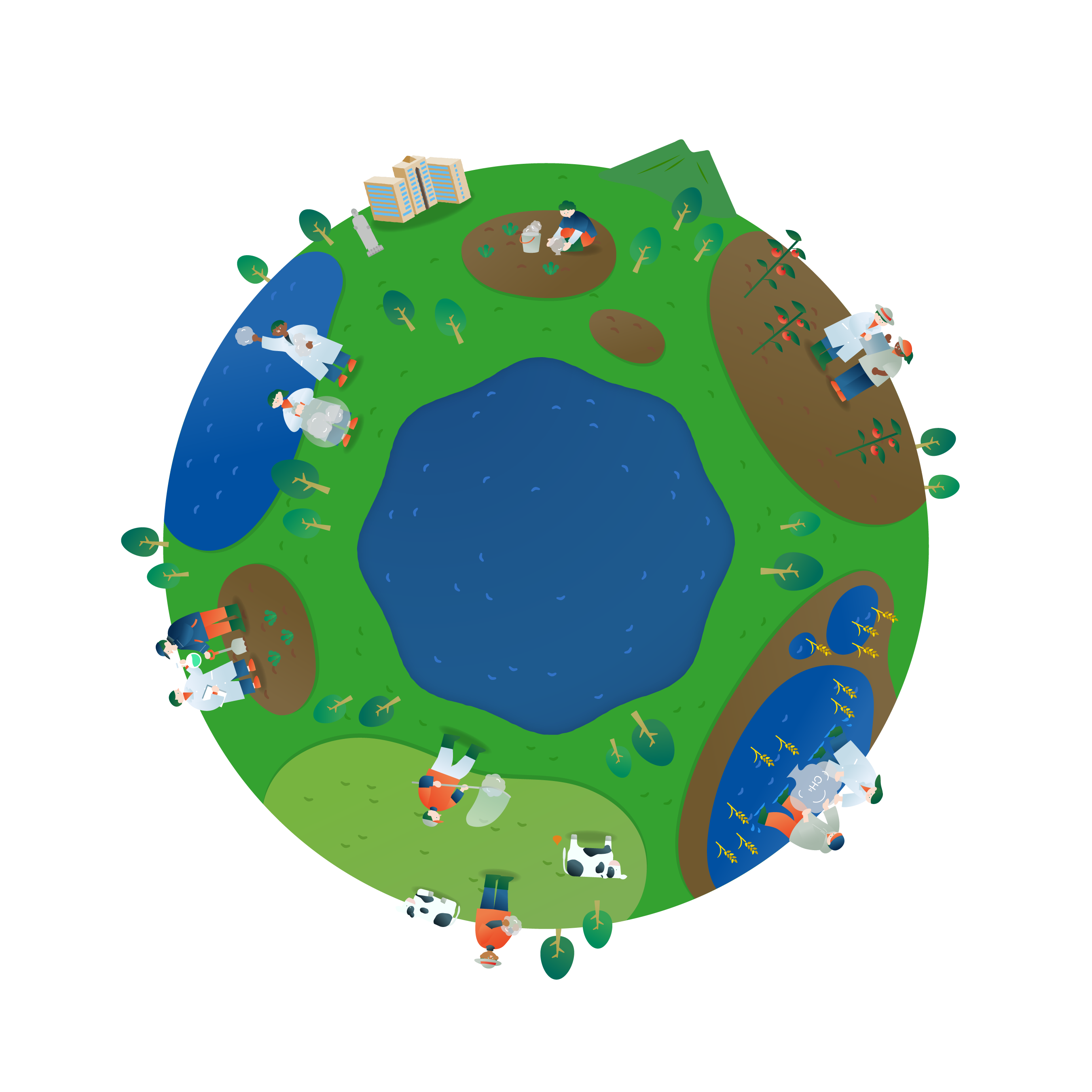
My research focuses on soil science and plant nutrition, soil microbiology, and crop science. Currently, I am studying methods to reduce methane emissions from rice paddies by inoculating rice seeds with beneficial bacteria.
Through this work, I aim to understand how microbial inoculation—along with soil management and cultivation practices—affects rice growth, greenhouse gas emissions, and indigenous microbial communities in paddy soils.
What inspired you to pursue this field?
I have always been interested in the sciences and fascinated by living organisms, including animals. When choosing my field of study, I wanted to pursue an applied discipline that would contribute to society and people’s lives, which led me to the College of Agriculture at Ibaraki University.
At first, I was interested in genetic recombination technologies in the life sciences. However, as I continued studying, I realized that instead of “creating something new,” it was inspiring to think about how we can improve the environment, society, and human life “using what already exists”. This shift in perspective led me to research microorganisms and rice cultivation.
Ibaraki University has many faculty members who study environmental conservation in agriculture, and being exposed to that knowledge naturally influenced me. I began researching greenhouse gases during my doctoral studies, and after completing the doctoral program, I continued developing this research theme within Gtech.
What is your current research theme?
My goal is to develop rice cultivation methods with reduced environmental impact, focusing on various management practices that utilize microorganisms.
Specifically, my research has shown that iinoculating rice seeds with an cultured bacterium can improve rice growth and reduce methane emissions from paddy fields. However, the mechanisms behind when and how the bacterium exert their effects remain unclear.
My research aims to elucidate these mechanisms through fundamental researches—examining inoculation methods, cultivation practices, microbial species, rice varieties, and other factors that influence interactions between microbes and rice plants.
What do you find rewarding about this research?
What is both fascinating and challenging is the realization that phenomena are often far more complex than we imagine.
In every experiment, I start with a hypothesis. Sometimes the results match the hypothesis, but many times I find outcomes that simply “cannot be explained by this alone!” Studying one unknown inevitably leads to another, and the process repeats. Because many interacting factors are involved, results can vary depending on the region where experiments are conducted or the microbial species used. Even in complex or seemingly inconsistent results, there must be underlying mechanisms. Unraveling these complexities is incredibly rewarding.
And since so many microbes remain undiscovered, I continue my research with the belief that “there must be good microbes we’ve overlooked!”
What goals or mission do you have for this research?
My aim is to clarify the mechanisms through which microbial inoculation of rice reduces greenhouse gas emissions.
Very few microbes have been reported to reduce methane emissions from rice paddies. While past studies have focused on adding microbes directly to soils, our approach—microbial inoculation of the rice seed—is somewhat different from previous methods.
If successful, this research will provide valuable new insights that can eventually be disseminated to farmers.
If we can establish simple and practical methods, it could help reduce the use of chemical fertilizers and contribute to climate change mitigation. To reach this goal, we must deepen our understanding of the underlying mechanisms.
What do you find attractive about Gtech?
One of Gtech’s greatest strengths is the diversity of fields represented by its researchers. Some faculty members specialize in areas I have never worked with before, and I look forward to collaborating with them.
Agricultural ecosystems include crops, soils, environments, and cultivation practices—far too many elements for any one person to cover alone. By supporting one another in areas outside our individual expertise, we can work together to gain a broader understanding of these complex systems.
A message for those interested in Gtech
Environmental issues may seem distant, but when engaging in agriculture—an essential industry—we must address these challenges. Currently, our knowledge and technologies for reducing environmental impact are still developing. Because the issues are complex and not easily understood, cultivating interest is especially important.
Moving forward, it is natural that researchers and the public may not always share the same perspectives. I hope we can build relationships where we can openly exchange opinions.
Because different generations and stakeholders may have different viewpoints, I value dialogues and interactions across diverse groups of people.
A message for students
University life is a rare time when you can fully devote yourself to what interests you, so I encourage you to explore your curiosities deeply.
Most importantly, it is crucial to find a research topic that you personally find fascinating. It can be challenging to choose a topic that keeps you motivated in the long term, but conducting research with the mindset that “I am doing something truly new” is exciting regardless of the outcome.
Agricultural ecosystems are incredibly complex, with countless unanswered questions. If you find this complexity fascinating, I would be delighted to explore this research together.