





Please tell us about your field of expertise.
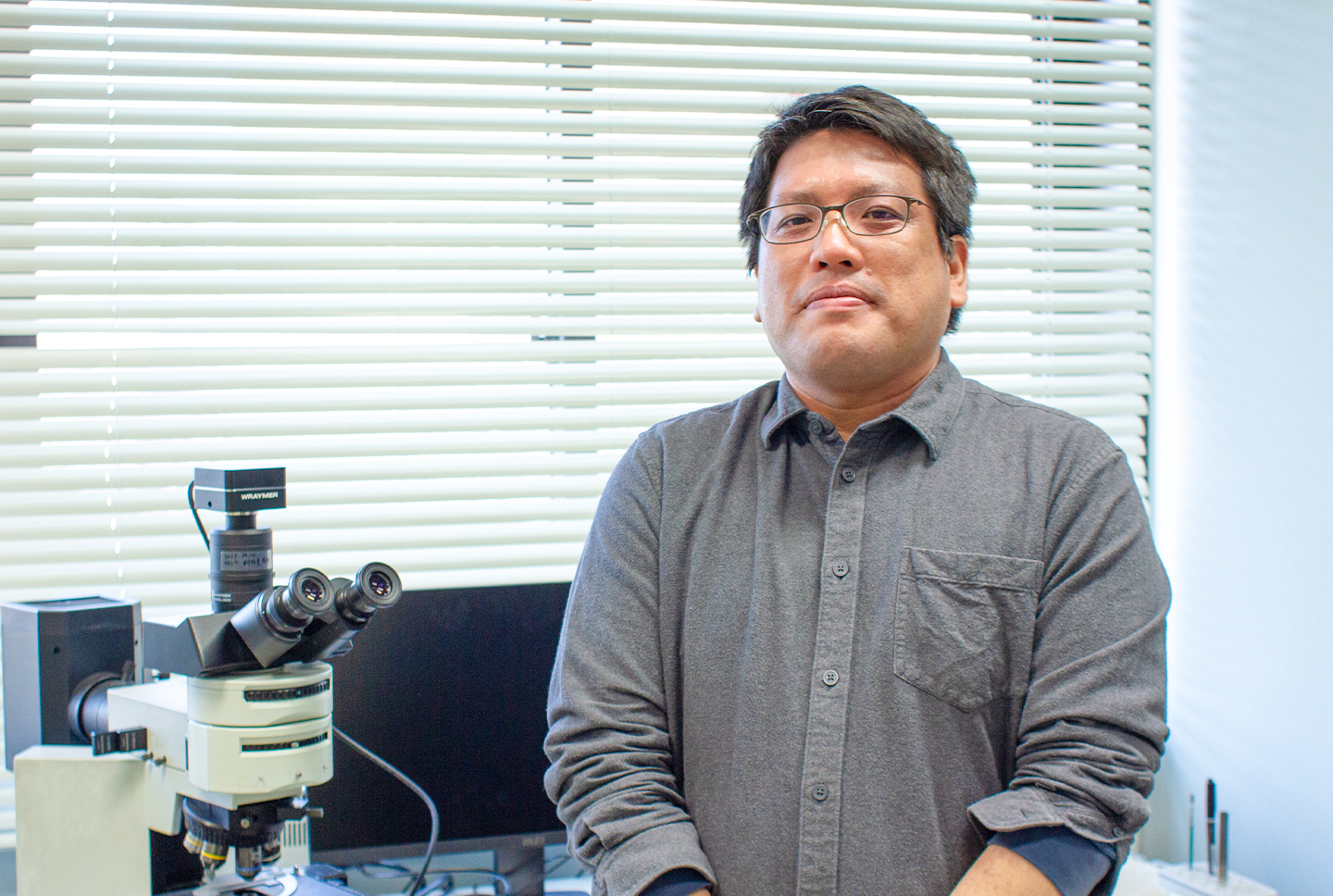
My background is microbiology, but over the past five years, I have shifted my focus toward microbial genomics.
My earlier research focused on microbial isolation, cultivation, and microscopic observation. More recently, I have begun integrating genomic analyses using high-throughput sequencers and bioinformatics into my research to better understand the potential functions of the microorganisms and how they can survive in specific environments.
I am motivated to contribute to sustainable agriculture and environmental conservation by applying my skills in microbiology and genomics to the study of beneficial microorganisms.
What inspired you to pursue this field?
I have been interested in chemistry and biology since high school. My interest in microorganisms first sprouted when I encountered a manga featuring microorganisms. At the same time, I learned about the Haber–Bosch process, which revolutionized ammonia production on a global scale by enabling the synthesis of ammonia from atmospheric nitrogen. I was also amazed by microorganisms such as root-nodulating bacteria, which biologically synthesize ammonia from atmospheric nitrogen (nitrogen fixation). This experience deepened my interest and led me to choose a university where I could study root-nodulating bacteria. While looking for universities that matched my interests, I learned that some plant-associated microorganisms, called endophytes, also have an ability to nitrogen fixation, and I chose Ibaraki University because it had a laboratory that studied endophytes.
However, during my freshman year, I realized that the lab at Ibaraki University mainly studied fungal endophytes, whereas nitrogen fixation by endophytes is mainly carried out by bacteria. Although it began as a misunderstanding, while exploring research topics in the lab, I encountered an unexplored research topic: endosymbiotic bacteria living inside fungal cells. This unique symbiotic relationship remains largely unknown, and my desire to understand it has driven my research ever since.
What do you find rewarding about your work?
Many microorganisms are difficult to cultivate in artificial media. Endosymbiotic bacteria living within fungal cells that I have studied are mostly categorized as “unculturable” microbes. Likewise, many soil microorganisms, including those useful for agriculture and environmental conservation targeted by Gtech, also fall into this category.
I find it rewarding to tackle these challenging research targets by inferring their functions from genomic data, exploring cultivation and preservation methods, and working toward their future utilization in agriculture.
I am also eager to improve DNA preparation for genomic sequencing of beneficial microbes, especially long-read sequencing, to achieve complete genome construction. This is because, even when microbial isolation in artificial media is successful, it can be difficult to grow enough cells to obtain sufficient DNA for sequencing. In other cases, unculturable microbes can be collected for DNA extraction, but the DNA yield often remains limited.
If we can overcome these “DNA is present, but not quite enough” situations and make whole-genome sequencing possible, it would accelerate microbial research and strongly support researchers at Gtech.
What is appealing about Gtech?
One of Gtech’s greatest strengths is its broad range of expertise in soil, plant, and microbial sciences, as well as cultivation management, environmental engineering, and socioeconomic research.
While my background is in fundamental microbiology, I increasingly feel that it is important to consider how microbes can be practically applied in agricultural fields.
At Gtech, several researchers already have experience applying beneficial microbes in agriculture. This environment enables me to further advance my research by proposing beneficial microbes as well as evidence-based packages that include practical methods and scientific support for their application. Such integrated approaches enable progress that would not be achievable through microbiology alone.
What goals or mission do you have in this research?
My goal is to discover beneficial microorganisms for agriculture and environmental conservation, establish culture collections of these microbes, and add genomic information so that they can be shared within Gtech and used for industrial applications.
Like humans, microorganisms have unique traits at both the phenotypic and genomic levels, each worthy of attention. Even within the same species, observing and sequencing multiple strains shows important differences. For this reason, I approach each strain and each study with care, considering this careful approach to be my mission in research.
Moreover, microbes do not live alone, and their interactions with other microbes are crucial. My experience studying endosymbiotic bacteria within fungal cells has given me tools to broadly explore microbial interactions, and it helps me make the most of my strengths in research.
What do you hope for from Gtech in the future?
I hope Gtech can generate technologies that are practical and easy for farmers to use.
By combining research from different fields within Gtech, we should be able to develop new agricultural materials and techniques, supported by clear scientific evidence.
Ideally, solutions developed in Ibaraki could also be adapted to regions with different climates and conditions, resulting in strategies that can be applied more widely.
A message for students
Today, data analysis has become essential not only in agricultural and biological sciences but across nearly all academic fields. However, this makes careful observation, such as examining microbial phenotypes, even more important.
My own experience observing microbes during my doctoral studies taught me to notice slight irregularities during their cultivation, which later provided invaluable insights for data analysis. While technologies continue to evolve rapidly, the importance of observation remains unchanged. Start by carefully observing the phenomena in front of you and form your own hypotheses, then use data analysis to test them. I believe this approach can deepen your understanding and make research much more enjoyable.